


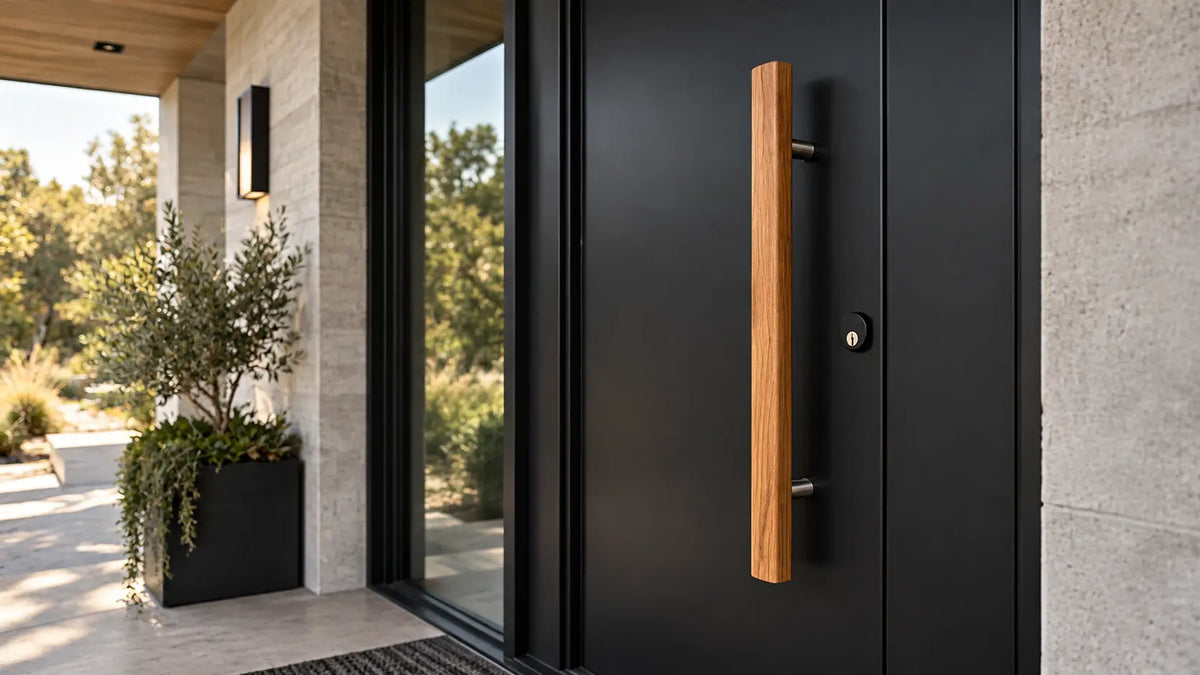
A front door pull handle is one of the first details people notice at an entrance. On a modern home, the right pull can make a simple door feel more architectural, add warmth to metal or glass, and create a stronger sense of scale than a small lever or knob. This guide covers modern front door pull-handle styles, practical sizes, materials, finishes and design ideas to help you choose a handle that looks intentional and feels comfortable every day.
- Quick answer
- What makes a front door handle look modern?
- Modern pull-handle styles
- Choosing the right size
- Wood vs metal front door pulls
- Choosing a finish
- Matching the handle to the door
- Single vs back-to-back
- Exterior use
- Wood Ceylon front door options
- What to measure before ordering
- Common design mistakes
- Frequently asked questions
What Type of Pull Handle Looks Best on a Modern Front Door?
Modern front doors usually work best with simple, well-proportioned hardware. Straight or softly sculpted vertical pulls, clean mounting brackets, natural wood, black finishes and brushed or polished stainless steel all work well when the handle matches the scale of the door.
For a standard modern residential front door, a pull around 15 to 24 inches is a practical visual starting range. Choose a longer handle when the door is wider, taller or intended to make a stronger architectural statement.
Handle length is only one part of the decision. Center-to-center mounting spacing, projection, door thickness and lock clearance also matter. For a detailed explanation, see our door pull handle size guide.
What Makes a Front Door Handle Look Modern?
Modern hardware is less about one specific material and more about clarity. The handle should have a deliberate shape, limited visual clutter and proportions that feel connected to the door rather than added as an afterthought.
A minimalist entrance does not have to mean an all-black metal handle. Natural teak can feel equally modern when the shape is clean and the mounting hardware is restrained.
Six Modern Front Door Pull Handle Styles
The best style depends on the architecture of the home, the door material and how prominent you want the hardware to be.
A simple vertical profile works well on contemporary timber, metal and glass doors. It is one of the easiest styles to combine with clean modern architecture.
A longer handle gives a tall or wide entrance stronger vertical emphasis. This style is especially effective on pivot doors, oversized panels and double entrances.
A gently curved or hand-shaped wooden pull adds character while keeping the overall entrance modern. It works well when you want the hardware to feel handcrafted rather than industrial.
Warm timber paired with stainless steel creates a useful material contrast. The wood softens the entrance while the metal brackets keep the installation crisp and architectural.
Walnut or ebony-style finishes can create a nearly monochrome appearance on dark doors while keeping the tactile feel and grain of real wood.
A thick or extra-long pull can become the visual focal point of a simple door. Use this approach when the entrance itself is large enough to support the additional scale.

How Long Should a Modern Front Door Pull Handle Be?
A handle that is too small can disappear on a large door, while an oversized pull can dominate a compact entrance. Use the door scale as the starting point.
| Front Door Type | Practical Starting Range | Design Effect |
|---|---|---|
| Compact residential door | 12"–16" | Subtle and restrained |
| Standard modern front door | 15"–24" | Balanced architectural look |
| Wide or heavy entry door | 20"–31" | Stronger visual presence |
| Tall pivot / statement door | 24"–36"+ | Oversized architectural scale |
These ranges are visual starting points rather than universal rules. The lock position, available mounting area and existing holes can affect the final choice.
The full handle length and the center-to-center mounting distance are not the same. If your front door already has holes, measure the C/C spacing before choosing a replacement pull.

Wood vs Metal Front Door Pull Handles
Both wood and metal can work beautifully on a modern entrance. The main difference is the visual and tactile character they bring to the door.
| Feature | Wood Pull Handle | Metal Pull Handle |
|---|---|---|
| Visual feel | Warm, natural and handcrafted | Clean, technical and uniform |
| Surface character | Visible grain and natural variation | More consistent finish |
| Touch | Natural, warm-feeling grip | Cooler metallic feel |
| Design contrast | Strong contrast on black, metal and glass doors | Works well with modern metal hardware sets |
| Customization | Shape, length and stain can often be customized | Depends on manufacturer and fabrication |
| Exterior planning | Wood species and protective finish matter | Metal grade and corrosion resistance matter |
A solid teak handle is a useful middle ground for buyers who like contemporary architecture but do not want the entrance to feel completely industrial. The natural grain becomes a small material feature against a simple door surface.

Which Finish Works Best for a Modern Front Door?
The finish changes the relationship between the handle and the door. A natural clear finish emphasizes teak grain, while darker stains create more contrast or allow the handle to blend into a dark entrance.
- Shows the natural teak grain clearly
- Works well with white, black and charcoal doors
- Pairs naturally with stone and timber architecture
- Creates a warm focal point
- Creates a more dramatic modern appearance
- Can blend with black or dark-bronze doors
- Still retains some natural wood character
- Useful for monochrome entry palettes
Wood Ceylon's current front-door pulls are offered in Clear, Burma, Walnut and Ebony finishes, with custom finish options available on selected designs.
How to Match a Wooden Pull to Your Front Door Color
Modern entrances usually look strongest when there is a clear relationship between the door color, handle and surrounding architecture.
| Door Color / Material | Handle Direction | Overall Look |
|---|---|---|
| Matte black | Natural teak or warm medium stain | High-contrast modern warmth |
| Charcoal / dark bronze | Clear teak, Burma or dark walnut | Architectural and refined |
| White / warm white | Natural teak | Clean Scandinavian / organic modern feel |
| Natural timber door | Similar tone or intentional darker contrast | Material-rich and cohesive |
| Glass and aluminum | Natural teak with stainless brackets | Warm contrast against technical materials |
| Deep green / blue | Warm natural or walnut-toned wood | Rich, residential character |
Exact color matching is not necessary. In many modern interiors and exteriors, a deliberate contrast looks more interesting than trying to make every material identical.

Should a Front Door Pull Be Single-Sided or Back-to-Back?
A single-sided pull gives you one full-size handle on one face of the door. A back-to-back set gives you two matching full-size pulls aligned on opposite sides.
- You only want the statement pull outside
- The inside uses different hardware
- The interior design calls for a smaller grip
- You do not need matching pulls on both faces
- You want the same full grip inside and outside
- A symmetrical look is important
- The entrance is used frequently from both directions
- The door construction supports through mounting
For mounting and door-thickness details, read our single-sided vs back-to-back door pull handle guide.
Can Modern Wooden Pull Handles Be Used on Exterior Front Doors?
Yes, provided the wood, finish, mounting hardware and maintenance are appropriate for the level of exposure. A deeply recessed entrance experiences very different conditions from a door receiving direct sun and rain.
Wood Ceylon's current front and entry pulls use solid teak, protective finishing and stainless steel mounting components. For example, the 16.5-inch Modern Front Door Pull uses solid teak with stainless steel brackets and a protective clear top coat.
If the entrance is exposed to weather, see our wooden door handles for exterior doors guide for material, finish and maintenance considerations.
Modern Front Door Pull Handles from Wood Ceylon
The current Wood Ceylon collection covers several useful front-door proportions, from restrained 15-inch pulls to larger architectural statement handles.
| Handle | Overall Length | C/C | Best For |
|---|---|---|---|
| Front Door Pull 022 | 15" | 10" | Standard residential entrances |
| Modern Front Door Pull 031 | 16.5" | 9" | Clean contemporary entrances |
| Minimalist Pull 016 | 18" | 12" | Simple modern doors |
| Entry Door Pull 010 | 20.5" | 15" | Larger front and entry doors |
| Statement Pull 012 | 22.5" | 16.5" | Heavy architectural entrances |
For a clean modern standard entrance, the 16.5-inch Modern Teak Front Door Pull Handle combines a straight teak profile with polished stainless steel ends. It has a 9-inch C/C bracket gap and a 3.5-inch depth for hand clearance.

For a slightly more compact door, the 15-inch Solid Teak Front Door Pull Handle uses a 10-inch center-to-center pattern and keeps the overall visual scale restrained.

For a larger entrance, the 20.5-inch Teak Entry Door Pull has a 15-inch C/C mounting distance and a longer architectural profile.
If you want a bolder focal point, the 22.5-inch Bold Teak Statement Pull uses a substantial 3-inch-wide solid teak body with a 16.5-inch C/C pattern.

Browse the full Wood Ceylon wooden door handle collection to compare current sizes, shapes and mounting options.
What Should You Measure Before Ordering?
Do not choose a front door pull from photographs alone. Record the actual door measurements first, especially if the door is already drilled.
If you are replacing an existing handle, measure the mounting holes center to center rather than assuming the new pull will match because its overall length looks similar.
Common Modern Front Door Handle Design Mistakes
- Choosing a handle that is too small for the door
- Mixing several unrelated metal finishes
- Ignoring the lock and cylinder position
- Confusing overall length with C/C spacing
- Using a pull with insufficient hand clearance
- Choosing exterior hardware without considering exposure
- Ordering single-sided when two pulls were expected
- Match handle scale to the door
- Keep the material palette intentional
- Coordinate pull and lock positions
- Measure mounting points accurately
- Check projection before ordering
- Choose a finish suitable for the environment
- Confirm the mounting configuration
Which Modern Front Door Pull Should You Choose?
Choose a restrained 15-to-18-inch pull when you want the handle to complement a standard residential door without becoming the main visual feature. Move toward 20 to 24 inches when the entrance is wider, heavier or more architectural. For tall pivot and statement doors, longer pulls may provide better proportion.
Material is equally important. A solid teak pull introduces natural warmth and grain, while stainless steel brackets keep the hardware visually connected to contemporary architecture.
If you are comparing current designs, start with the Modern Teak Front Door Pull 031 for a clean standard entrance or the 20.5-inch Entry Door Pull 010 for a larger architectural door.
Frequently Asked Questions
What size pull handle is best for a modern front door?
For many standard residential front doors, approximately 15 to 24 inches is a practical visual starting range. Wider, taller or heavier entrances can suit longer pulls, while compact doors may look better with a shorter handle.
Are long pull handles modern?
Yes. Long vertical pulls are common on contemporary entry doors because they emphasize height and create a simple architectural line. The handle should still be proportional to the actual door.
Can a wooden handle look modern?
Yes. Modern design does not require metal-only hardware. A straight or minimally sculpted solid-wood pull with clean brackets can look highly contemporary, especially on black, white, glass or metal doors.
Is teak a good material for a front door handle?
Teak is a durable hardwood with natural oils and an attractive grain, making it useful for architectural pull handles. For exterior doors, the protective finish, mounting hardware and level of weather exposure should also be considered.
What color handle looks best on a black front door?
Natural teak creates a warm high-contrast look on black doors, while darker walnut or ebony-style wood finishes create a more understated monochrome appearance. The best choice depends on the surrounding materials and architecture.
Should a front door pull be single-sided or double-sided?
Choose single-sided when you only need one full-size pull on one face of the door. Choose a back-to-back set when you want matching full-size handles on both sides and the door construction supports that mounting configuration.
Can I install a wooden pull on a metal or aluminum front door?
Yes, provided the mounting hardware is compatible with the construction and thickness of the door. The wooden grip and door material do not need to be the same.
What is center-to-center spacing on a door pull?
Center-to-center spacing, or C/C, is the distance from the center of one mounting point to the center of the other. It determines where the door needs to be drilled and is different from the handle's total overall length.
Can Wood Ceylon make custom-size front door pulls?
Custom overall lengths, center-to-center mounting distances and finishes are available for many Wood Ceylon door pull designs. Custom sizing is useful for existing hole patterns, oversized doors and project-specific proportions.



Leave a comment