


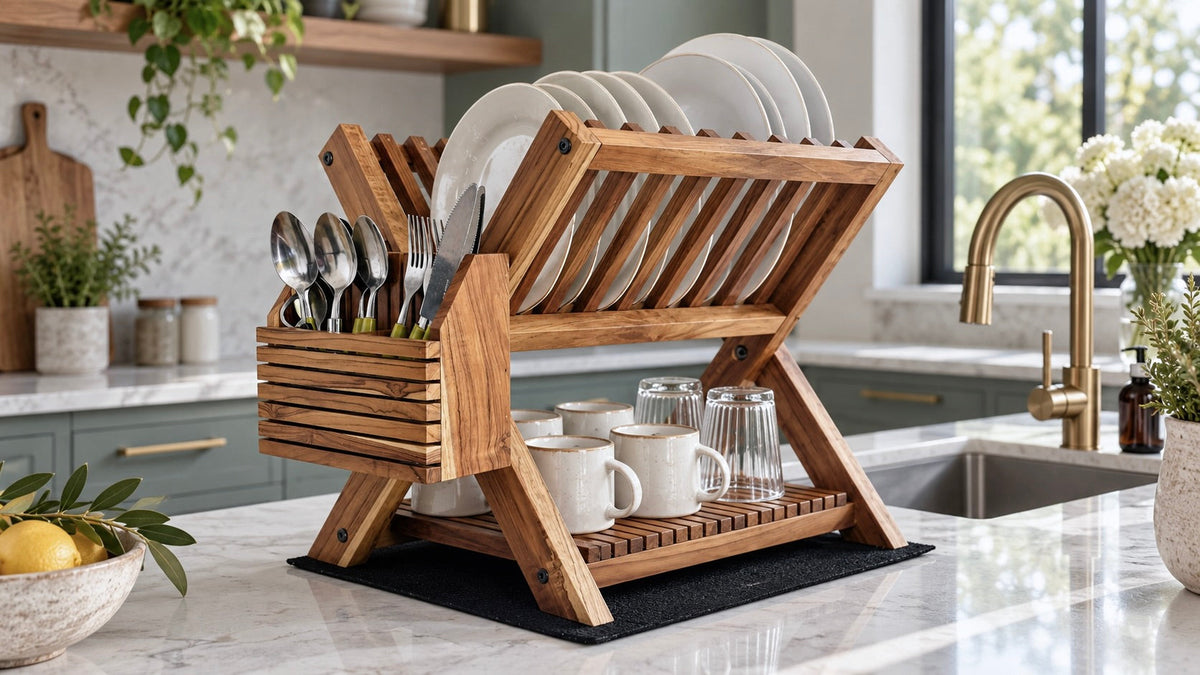
A wooden dish drying rack can keep everyday dishes organized without making your kitchen counter feel utilitarian. But the type of wood, size, airflow, construction, and daily care all matter. This guide explains the pros and cons of wooden dish racks, how they compare with metal and bamboo, and what to check before choosing one for your kitchen.
A well-made wooden dish drying rack can be an excellent everyday choice when it uses a wood suited to moisture, provides enough airflow around wet dishes, and is allowed to dry between uses. Teak is especially popular because of its natural oils, durability, and long history of use in moisture-prone environments.
Are Wooden Dish Drying Racks Good?
Yes. A wooden dish drying rack can be both practical and attractive when the material and construction are appropriate for regular kitchen use.
Unlike a rack that gets stored away after each use, a dish drainer often stays visible beside the sink all day. That makes appearance more important than many people initially expect. Natural wood can make a drying rack feel more like part of the kitchen rather than a temporary piece of plastic or metal equipment.
The main consideration is moisture. A dish rack repeatedly comes into contact with dripping plates, bowls, glasses, and utensils. The wood therefore needs to tolerate normal moisture exposure while the rack's design should allow both the dishes and the rack itself to dry.
Construction quality matters too. Open spacing between components, stable joints, smooth surfaces, and an appropriate protective finish can all influence how pleasant the rack is to use over time.
A wooden dish rack should not be treated as permanently waterproof. Even moisture-resistant wood benefits from airflow, regular cleaning, and avoiding standing water.
Why Does Teak Work Well for a Dish Drying Rack?
Different wood species behave differently around moisture. Teak is widely valued for its durability and naturally occurring oils, which contribute to its performance in environments where occasional water exposure is expected.
This is one reason teak has traditionally been used for outdoor furniture, marine applications, bathroom pieces, and other products that experience changing humidity or moisture.
If you want to understand how teak compares with oak, pine, mahogany, cedar, and other woods, see our teak wood vs other woods guide.
At Wood Ceylon, we use solid teak for our larger handmade teak dish drying rack. The rack is shaped and sanded by hand in our Sri Lankan workshop and protected with a sealed finish designed for everyday kitchen use.
It is still important to wipe away excessive water and allow the rack to dry properly. Moisture resistance reduces maintenance concerns, but it does not remove the need for sensible care.
Pros and Cons of Wooden Dish Drying Racks
A wooden rack is not automatically the best option for every kitchen. Understanding the advantages and disadvantages makes it easier to decide whether one suits your routine.
- Warm, natural appearance that can remain on display
- Solid wood can provide a sturdy and stable feel
- Works well with modern, farmhouse, rustic, and minimalist kitchens
- Quality hardwood designs can provide long-term everyday use
- Natural grain makes each handcrafted rack visually unique
- Can coordinate naturally with wooden cutting boards and kitchen accessories
- Should not remain continuously wet or sit in standing water
- Quality hardwood racks generally cost more than basic plastic options
- Solid wood can be heavier than lightweight metal or plastic
- Requires occasional cleaning and basic wood care
- Performance depends heavily on wood species and construction quality
For shoppers who mainly want the lowest possible price, a simple plastic rack may be enough. For someone who sees the rack as a permanent part of the countertop, natural wood can offer a very different experience.
Wooden Dish Rack vs Stainless Steel
Stainless steel and wood can both make excellent dish racks, but they appeal to different priorities.
| Feature | Wooden Dish Rack | Stainless Steel Dish Rack |
|---|---|---|
| Appearance | Warm, natural, furniture-like | Clean, modern, utilitarian |
| Water exposure | Depends on wood species, finish, and care | Well suited to regular wet use |
| Weight | Often heavier and more substantial | Often lighter depending on construction |
| Maintenance | Needs drying and occasional wood care | Usually simple to wipe and dry |
| Natural variation | Unique grain and tone | Consistent manufactured appearance |
| Best suited for | Natural, warm, premium kitchen interiors | Modern kitchens focused on low maintenance |
Neither material is universally better. If easy maintenance is your main priority, stainless steel has clear advantages. If you want a rack that contributes to the look and character of the kitchen, a well-built wooden rack becomes more appealing.
Teak vs Bamboo Dish Racks: What's the Difference?
Bamboo and teak are often compared because both provide a natural look, but they are very different materials.
Bamboo is technically a grass. It can be manufactured into lightweight, affordable kitchen products and is widely used for folding and compact dish racks.
Teak is a hardwood known for strength, natural oils, and durability. Solid teak products are usually heavier and more substantial than inexpensive bamboo alternatives.
| Factor | Teak | Bamboo |
|---|---|---|
| Material type | Hardwood | Grass-based material |
| Typical feel | Dense and substantial | Lightweight |
| Natural appearance | Rich grain with warm tonal variation | Usually light and uniform |
| Price | Usually higher | Often more affordable |
| Best fit | Long-term, premium countertop use | Budget-conscious or occasional use |
The material name alone should not decide your purchase. Joint quality, finish, dimensions, drainage, capacity, and how you plan to use the rack are equally important.
Do Wooden Dish Racks Get Moldy?
Wood can develop mold or mildew if it remains damp for extended periods and does not have an opportunity to dry. That does not mean every wooden dish rack will become moldy.
The biggest factors are moisture, airflow, cleanliness, and how the rack is used.
A tray or absorbent mat can also help prevent water from remaining underneath the rack. Our larger teak rack, for example, includes a water-collecting mat for the countertop.
For broader information about caring for natural teak, read our teak wood maintenance guide.
Are Wooden Dish Racks Sanitary?
Yes, a wooden dish rack can be kept sanitary with regular cleaning and proper drying.
Remember that a drying rack normally holds dishes after they have been washed. The rack's job is to separate those wet dishes so water can drain and air can circulate.
Food residue, dirty water, and constantly damp surfaces can create hygiene problems on many materials, not only wood. Regular cleaning therefore matters regardless of whether a rack is made from teak, stainless steel, plastic, or bamboo.
How to Choose the Right Wooden Dish Drying Rack
Before buying a wooden dish rack, look beyond the product photograph. A few measurements and practical checks can prevent you from ending up with a rack that is attractive but inconvenient.
Measure the width and depth available beside your sink. Also check vertical clearance below wall cabinets and leave enough space to use nearby appliances comfortably.
Count how many dinner plates, bowls, cups, glasses, and utensils normally need drying after a typical meal. A couple and a large family usually need very different capacities.
Thick handmade dishes, deep plates, and oversized dinnerware may require more spacing than standard plates. Check dimensions before purchasing.
Open construction helps water drain and allows air to move around dishes and wooden components as they dry.
Consider whether you need a drain board, removable tray, absorbent mat, or another way to stop water from collecting on the countertop.
"Wooden" does not describe a single material. Look for the wood species, construction method, finish, assembly requirements, and manufacturer care instructions.
What Size Wooden Dish Rack Do I Need?
There is no single best dish rack size because the right dimensions depend on both your available countertop and your typical dish load.
Measure available counter space first, then choose capacity. A larger rack is only useful when it leaves enough room to comfortably use the rest of your kitchen.
For a smaller countertop, Wood Ceylon's small handcrafted teak dish drying rack measures approximately 18 inches long × 15 inches wide × 17 inches high, including its cutlery holder.
For households that need more drying space, our larger teak dish drying rack measures approximately 28 inches long × 15 inches wide × 17 inches high. The current design includes upright storage for up to 15 plates along with areas for cups, glasses, and cutlery.
| Wood Ceylon Rack | Dimensions | Best For |
|---|---|---|
| Small Teak Dish Rack | 18"L × 15"W × 17"H | Smaller kitchens, apartments, lighter daily dish loads |
| Large Teak Dish Rack | 28"L × 15"W × 17"H | Families, larger counters, higher daily dish volume |
If you want to see the design and craftsmanship behind the larger rack in more detail, visit our original handmade teak dish drying rack story.
How to Clean a Wooden Dish Drying Rack
Routine maintenance is straightforward. The main goal is to remove residue without unnecessarily soaking the wood and then give the rack enough time to dry.
Empty the rack so you can reach the slots, joints, lower shelf, and areas where water normally collects.
Use a soft cloth to remove dust, crumbs, and visible buildup before applying additional moisture.
Use a damp soft cloth and mild soap when deeper cleaning is needed. Follow the care instructions supplied with your particular rack and finish.
Do not leave pools of water sitting on wooden surfaces or around joints after cleaning.
Place the rack where air can move freely around it and let the wood dry before returning it to normal use.
Avoid prolonged soaking and harsh cleaners unless the manufacturer specifically recommends them for the finish used on your rack.
How Long Can a Wooden Dish Rack Last?
There is no universal lifespan for a wooden dish rack. Longevity depends on the wood species, construction, finish, daily use, cleaning routine, ventilation, and exposure to standing water.
A lightweight mass-produced rack and a solid hardwood rack should not automatically be expected to age in the same way.
When comparing products, it can therefore be more useful to consider material quality, joinery, finish, capacity, repairability, and expected use rather than looking only at the lowest initial price.
Is a Wooden Dish Drying Rack Worth It?
A wooden dish drying rack is worth considering if you want an everyday kitchen item to provide both function and visual warmth.
It is especially well suited to people who:
- Prefer natural materials in the kitchen
- Want to reduce the amount of visible plastic on the countertop
- Leave their dish rack out permanently
- Value handmade products and natural wood grain
- Want a substantial rack for daily dishes
- Already use wooden cutting boards, trays, or other kitchen accessories
On the other hand, a simple plastic or stainless rack may be a better match if your priorities are minimum cost, very low weight, or the least possible wood maintenance.
The best rack is not simply the most expensive or the largest. It is the one that fits your counter, your dishes, and the way you actually use your kitchen.
Why Wood Ceylon Makes Dish Racks from Teak
At Wood Ceylon, our approach is to treat an everyday kitchen organizer with the same attention we give to other pieces of handcrafted furniture and homeware.
Our teak dish racks are handmade in Sri Lanka from solid teak. Components are shaped, sanded, assembled, and finished by our workshop team with an emphasis on both practical use and the natural character of the wood.
Because teak is a natural material, grain pattern and tone vary from one rack to another. Those differences are part of the piece rather than manufacturing defects.
You can compare our current dish racks and other handcrafted kitchen pieces in the Wood Ceylon kitchen collection.
Need more drying space? View the large handmade teak dish drying rack. Working with a smaller countertop? See the compact teak dish rack.
Frequently Asked Questions
What is the best wood for a dish drying rack?
A wood used for a dish rack should handle normal moisture exposure well and remain dimensionally stable with sensible care. Teak is a strong option because of its natural oils, durability, and long history of use in moisture-prone environments. Construction and finish are also important.
Can a teak dish rack get wet?
Yes. Teak is well suited to normal moisture exposure, but a teak dish rack should still be allowed to dry rather than remaining continuously soaked or sitting in standing water.
Do wooden dish drying racks get moldy?
They can if they remain damp for extended periods with poor airflow. Regular cleaning, removing standing water, and letting the rack dry between uses can greatly reduce the conditions that encourage mold and mildew.
Are wooden dish racks sanitary?
A wooden dish rack can be kept sanitary with routine cleaning and proper drying. Food residue and continuously damp surfaces should not be allowed to build up, regardless of what material the rack is made from.
Is teak better than bamboo for a dish rack?
Neither material is right for every buyer. Bamboo is often lighter and more affordable, while solid teak is generally chosen when a substantial hardwood construction, natural grain, and long-term use are priorities.
Should a wooden dish rack have a drip tray or mat?
A tray, drain board, or absorbent mat can be helpful because it prevents dripping water from remaining underneath the rack and can also help protect the countertop.
What size dish drying rack should I buy?
Measure the available counter width, depth, and cabinet clearance first. Then choose enough capacity for your normal daily dishes. Smaller households may prefer a compact rack, while larger households can benefit from a two-level design with dedicated plate, cup, and cutlery storage.
Are wooden dish racks good for small kitchens?
Yes. A compact wooden rack can work very well in a small kitchen when it uses vertical space efficiently. Always compare the product dimensions with the exact area beside your sink before ordering.
How often should I clean a wooden dish rack?
Wipe away visible water and residue regularly and perform a deeper cleaning whenever buildup appears. The exact frequency depends on how often the rack is used and the conditions around your sink.
Can I leave a wooden dish rack beside the sink?
Yes, provided the area has reasonable airflow and standing water is not allowed to remain beneath or around the rack for long periods.



Leave a comment