


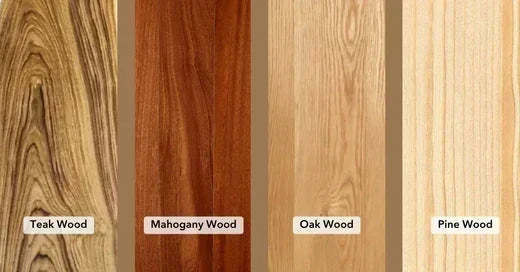
Choosing the right wood for a piece of furniture or décor isn't just about looks. The wood you pick affects how long the piece lasts, how much upkeep it needs, and how well it copes with sun, moisture, or daily use. Teak has a strong reputation in this space, but it isn't automatically the right choice for every project. Here's how it actually compares to mahogany, oak, pine, and cedar — and how to decide what's right for yours.
Why wood type matters
The material you choose shapes four things in particular:
- Durability — how long the piece holds up under regular use
- Resistance — how well it copes with moisture, pests, and general wear
- Maintenance — how much time and effort it needs to stay looking good
- Value over time — whether the upfront cost pays off in longevity
These factors matter most for anything exposed to the elements or heavy daily use, which is why outdoor furniture and high-traffic pieces tend to need a more resilient wood than, say, a decorative shelf.
What makes teak different
Teak's reputation comes down to a few consistent traits.
Natural durability. Teak contains natural oils that help it resist rot, decay, and insects, which is a big part of why it holds up so well over the years.
Weather resistance. Teak copes with rain, sun, and temperature swings better than most woods, without cracking or warping easily — one of the reasons it's such a common choice for outdoor pieces.
A distinctive look that changes with age. Teak starts with a warm, golden-brown tone and gradually weathers to a soft, silvery-grey patina if left untreated outdoors. Some people love this ageing process; others prefer to maintain the original colour with regular oiling.
Lower maintenance than most hardwoods. Because of its natural oil content, teak needs less frequent sealing or treatment than many alternatives.
How teak compares to other popular woods

No wood is universally "better" — it depends on the project. Here's a quick side-by-side, followed by more detail on each comparison.
Teak vs mahogany
Both are durable hardwoods, but teak's natural oils give it better resistance to rot and pests, particularly outdoors. Mahogany tends to be more affordable and suits indoor furniture well, with a reddish-brown tone that's a different aesthetic from teak's gold.
Teak vs oak
Oak is a solid, versatile hardwood and a popular flooring choice, but it's more vulnerable to moisture and generally needs more frequent sealing for outdoor use. Teak holds up better outside; oak is often the more practical and affordable pick indoors.
Teak vs pine
Pine is a softwood, considerably less durable than teak, and not recommended outdoors without heavy treatment. It's inexpensive and useful for indoor or DIY projects, but it won't match teak for longevity.
Teak vs cedar
Cedar has natural resistance to rot and insects too, and it's more budget-friendly than teak. It works well for outdoor furniture in milder conditions, but teak generally outlasts it under sustained exposure.
| Wood | Durability | Maintenance | Best suited for |
|---|---|---|---|
| Teak | Very high | Low | Outdoor furniture, long-term pieces |
| Mahogany | High | Moderate | Indoor furniture |
| Oak | Moderate–high | Moderate–high (outdoor) | Indoor furniture, flooring |
| Pine | Low–moderate | High | Indoor, DIY, budget projects |
| Cedar | Moderate | Moderate | Outdoor furniture (milder conditions) |
Key factors to consider when choosing your wood
Project type. Outdoor furniture calls for weather resistance, which favours teak or treated cedar. Indoor pieces have more flexibility — oak, mahogany, or pine can all work well depending on the look you want.
Budget. Teak sits at the premium end of the market. If cost is the deciding factor, pine or cedar offer more accessible starting points.
Aesthetic preference. Pine and cedar suit a more rustic, casual look. Oak and mahogany lean traditional. Teak tends to read as refined and versatile, working in both classic and contemporary spaces.
Maintenance appetite. If you'd rather not deal with regular sealing or treatment, teak's low-maintenance nature is a genuine advantage. Oak and pine, especially outdoors, ask more of you over time.
Is teak worth the investment?
- Strong natural resistance to rot, decay, and insects
- Handles outdoor conditions without cracking or warping
- Requires less frequent maintenance than most alternatives
- Ages into a distinctive silvery patina, or keeps its colour with occasional oiling
- Higher upfront cost than mahogany, oak, pine, or cedar
- Can be harder to source in some regions
- Denser and heavier than most alternatives, which matters for portability
Finding the right wood for your project
There's no single "best" wood — only the best wood for what you're making and where it'll live. If durability and low maintenance matter most, especially for anything that'll face the outdoors, teak is difficult to beat. If budget or a particular indoor aesthetic is the priority, mahogany, oak, pine, or cedar may serve you just as well.
If teak's characteristics sound like the right fit, browse our teak décor collection to see the grain, tone, and finish in person before you commit.

Frequently asked questions
Is teak really the best wood for outdoor furniture?
For most outdoor uses, yes — its natural oils give it strong resistance to rot, insects, and weather without heavy treatment. Cedar is a reasonable alternative in milder climates.
Why is teak more expensive than other woods?
Its durability, low maintenance needs, and slower-growing supply all contribute to a higher price point compared to mahogany, oak, pine, or cedar.
Does teak need to be oiled regularly?
Not as often as most woods. Teak's natural oils offer some built-in protection, though occasional oiling helps maintain its original colour if you don't want it to weather to grey.
Is oak or teak better for flooring?
Oak is the more common and practical choice for flooring, largely due to cost and wide availability. Teak is generally better suited to furniture and outdoor pieces.
What's the difference between teak and mahogany?
Both are durable hardwoods, but teak has better natural resistance to moisture and pests, making it the stronger choice outdoors. Mahogany tends to suit indoor furniture and is usually more affordable.
Is pine a bad choice for furniture?
Not necessarily — it's a good option for budget or indoor DIY projects, but it's a softwood and won't match teak, oak, or mahogany for long-term durability.


Leave a comment