


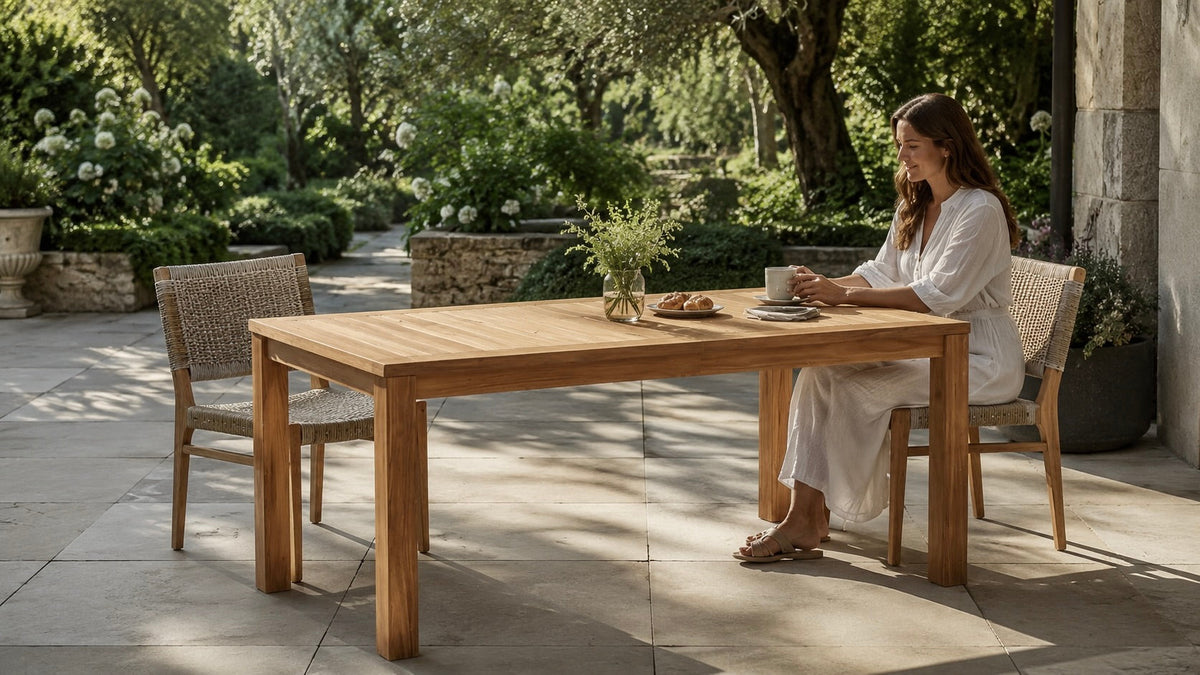
If you're furnishing a patio, garden or balcony, teak is one of the first woods people consider — and for good reason. It's known for holding up outdoors better than most timbers, but "teak" covers a wide range of quality, and not every table sold as teak is built the same way. This guide walks through what actually makes a teak outdoor table durable, what to check before you buy, and how to keep it looking good for years.
Why teak works outdoors
Teak is naturally dense and contains oils that help it resist moisture, warping and insect damage better than many other hardwoods. That's why it's been used for outdoor furniture, boat decks and garden pieces for generations. Left untreated, teak weathers to a soft silver-grey; oiled or sealed, it keeps more of its warm honey-brown tone.
None of this means every teak table performs identically. Quality depends heavily on the grade of teak used, how the piece is constructed, and how it's finished — which is exactly why the next section matters.
Solid teak vs teak veneer: what to look for

Not all "teak" furniture is made the same way, and the difference matters a lot for anything left outside.
| Feature | Teak veneer | Solid teak |
|---|---|---|
| Construction | Thin teak layer over another wood or composite core | Made entirely from teak timber |
| Outdoor durability | Core material can be vulnerable to moisture | Naturally more resistant throughout |
| Repairability | Difficult once the veneer is damaged | Can typically be sanded and refinished |
| Longevity outdoors | Shorter, especially in humid climates | Generally longer with proper care |
Veneer pieces aren't necessarily poor quality, but they're usually better suited to indoor or covered spaces rather than full outdoor exposure. If you want a table that will genuinely live outside, solid teak construction is worth confirming before you buy.
What to check before buying a teak outdoor table

A few practical details make the difference between a table that lasts and one that disappoints within a season.
- Construction type — ask directly whether the table is solid teak or veneer
- Joinery — traditional mortise-and-tenon or dowel joints tend to hold up better outdoors than glued or stapled joints
- Size and shape for your space — measure the area, including clearance for chairs, before ordering
- Finish — teak oil, sealant or left natural all affect maintenance needs and appearance over time
- Intended use — a table used daily for outdoor dining has different demands than one used occasionally for decoration
Bringing these details to whoever is making or selling your table helps them recommend the right build for your situation.
How climate affects your table
Teak handles moisture better than most woods, but no timber is entirely maintenance-free outdoors. Coastal air, heavy rainfall, and strong direct sun all affect how a table ages, even a well-made one.
In humid or coastal climates, teak's natural resistance to moisture is a genuine advantage — but regular light cleaning and occasional oiling still help protect the finish and reduce surface staining over time.
If your outdoor space gets heavy sun exposure or sits close to the sea, mention this when discussing your table, since it can influence the recommended finish.
Caring for a teak outdoor table

Teak is relatively low-maintenance compared with other outdoor woods, but a little routine care extends its life considerably.
Wipe down with a soft brush or cloth and mild soapy water to remove dirt and debris.
Strong cleaners can strip natural oils from the wood, so stick to mild solutions.
Apply teak oil periodically to maintain colour, or let the wood weather naturally to silver-grey.
Cover or store the table where practical, particularly during the off-season.
Inspect fixings occasionally, especially after heavy use or rain.
Mistakes to avoid when choosing an outdoor table
Assuming "teak" always means solid teak. Always confirm construction before buying, especially for pieces that will stay outside year-round.
Ignoring joinery quality. A beautiful tabletop won't matter much if the joints loosen after a season outdoors.
Skipping measurements. Outdoor tables often need clearance for chairs and walking space that's easy to underestimate.
Choosing finish without thinking about maintenance. A natural weathered look needs less upkeep than a glossy oiled finish, which some owners prefer to reapply periodically.
Buying without asking about intended use. A table for occasional weekend use has different requirements than one used for daily outdoor dining.
Customizing a teak outdoor table for your space
If you're planning an outdoor table for a specific space, sharing your measurements, intended use, and any design preferences helps ensure the finished piece actually fits your patio, garden or balcony rather than requiring compromises later. Details like tabletop size, shape, and finish preference are useful starting points for any conversation about a custom piece.
Frequently asked questions
Is teak really better than other woods for outdoor tables?
Teak's natural oils and density give it strong resistance to moisture and insects, which is why it's widely used outdoors. That said, proper construction and care matter just as much as the species itself.
Does a teak outdoor table need to be covered in winter?
It isn't always necessary, since teak handles weather well, but covering or storing it during extreme conditions can help preserve the finish and joints over time.
Will my teak table change color outdoors?
Yes — untreated teak naturally weathers to a silver-grey patina. Regular oiling helps maintain the original warmer tone if that's your preference.
Can a teak table be used near the coast?
Teak's moisture resistance makes it a reasonable choice for coastal settings, though salt air and sun exposure still call for regular cleaning and care.
How do I know if a table is solid teak or veneer?
Ask directly about construction, and check whether the wood grain and colour are consistent all the way through any visible edges or undersides.
Planning your teak outdoor table
Choosing a teak outdoor table comes down to understanding construction quality, matching the size and finish to your space, and keeping up with simple maintenance. If you're planning a custom piece for your patio or garden, share your measurements and design preferences and we'll help you think through the right approach.


Leave a comment