


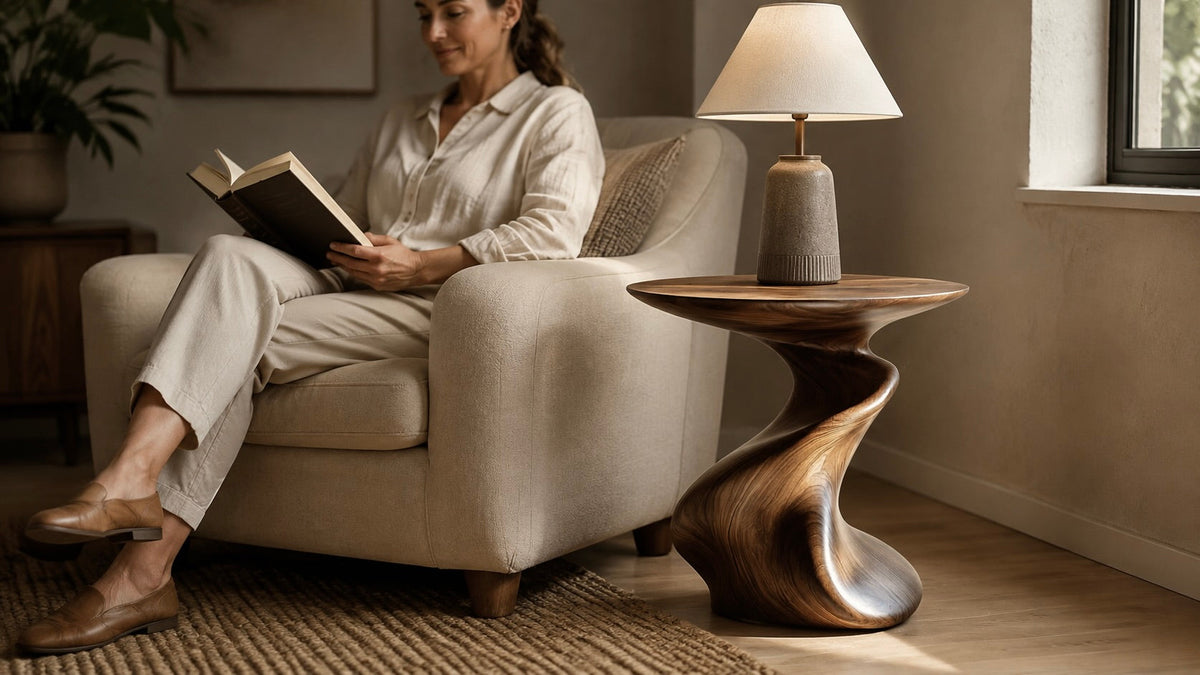
A side table looks like the easiest piece of furniture in the room to buy — until you're standing between three "close enough" options online, none of which you're sure will actually work. This guide breaks the decision down to three things that actually matter: size, style, and wood type.
Why the Right Side Table Matters
A side table does more work than people give it credit for. It's where your coffee sits while you read, where your lamp lives so you can actually see the page, and where your phone charges overnight without you tripping over the cord in the dark. Get the proportions wrong and you'll be nudging it out of the way for years. Get the wood wrong and you'll be refinishing it — or replacing it — far sooner than you should.
Because it's small, a side table is also one of the easiest pieces to get handcrafted in solid wood rather than settling for veneer or particleboard. That's where the real value is: a well-made wood side table can genuinely last decades, developing a richer patina the longer you own it.
Getting the Size Right
Size is where most side table purchases go wrong, because it's tempting to shop by look alone. A few measurements decide whether a table actually works in your space, so it's worth confirming them before you order.
As a rule of thumb, most living room side tables sit between 22–26 inches tall, while bedside tables usually range from 20–26 inches depending on your mattress height. Aim for the tabletop to land within an inch or two of your sofa or chair armrest, or level with your mattress top for a bedside table. Leave at least 3 inches of clearance between the table and the seating it sits beside, so you're not bumping it constantly.
Choosing a Style That Fits Your Room
Once size is sorted, style is really about matching the table's silhouette and finish to what's already in the room, rather than treating it as a standalone statement piece — unless that's specifically the look you're going for.
Modern minimalist: clean geometric lines, a single wood tone, no visible hardware. Works well with low-profile sofas and neutral palettes.
Mid-century modern: tapered or angled legs, warm walnut or teak tones, often slightly raised off the floor. Pairs naturally with tan leather, brass accents, and curved silhouettes.
Rustic or organic: visible grain, live edges, or hand-carved detailing. Sits well in spaces with linen textiles, woven baskets, and warmer, earthier color schemes.
Traditional or heirloom: turned legs, drawer fronts, richer stains. Suits rooms with existing wood furniture in similar tones — dining tables, bed frames, or bookcases.
If your room already has warm wood tones anywhere — a bed frame, flooring, shelving — match your side table's wood tone to that first. Mismatched undertones, like orange-toned oak next to cool grey-toned walnut, is one of the most common styling mistakes people don't notice until the piece is already in the room.
Understanding Wood Types
This is the part that actually determines how long your table lasts. "Solid wood" covers a wide range of species, and they don't perform the same way.
| Wood Type | Durability | Moisture Resistance | Typical Look |
|---|---|---|---|
| Teak | Excellent | Excellent — natural oils resist warping | Golden brown, tight straight grain |
| Walnut | Very good | Good | Deep chocolate brown, fine grain |
| Oak | Very good | Moderate | Light tan, pronounced grain |
| Mango wood | Good | Moderate | Variegated tones, dramatic grain |
| Acacia | Good | Moderate | Rich amber, swirling grain |
| Pine | Fair | Low — dents and scratches easily | Pale, soft, visible knots |
If you want a table that shrugs off the odd condensation ring from a cold glass or a humid climate, teak is the standout — it's the same wood used for outdoor boat decking because of how well it handles moisture without warping. Walnut and oak are excellent for indoor-only rooms with more stable humidity. Softer woods like pine are budget-friendly but show wear faster, which matters if the table is going somewhere high-traffic like an entryway or a kid's room.
Solid Wood vs. Other Materials
- Can be sanded and refinished for decades of use
- Develops a richer patina with age rather than looking worn
- Genuinely biodegradable and often sustainably sourced
- No off-gassing from synthetic resins or laminates
- Higher upfront cost than veneer or engineered wood
- Can expand or contract slightly with humidity changes
- Heavier to move than MDF or metal alternatives
- Requires occasional oiling depending on the species
5 Best Handcrafted Wood Side Tables Right Now
Beyond our own workshop, here are five genuinely well-made, handcrafted solid wood side tables from other makers worth knowing about if you're comparing styles and price points.
1. Tikamoon — Lou Mindi Wood Side Table
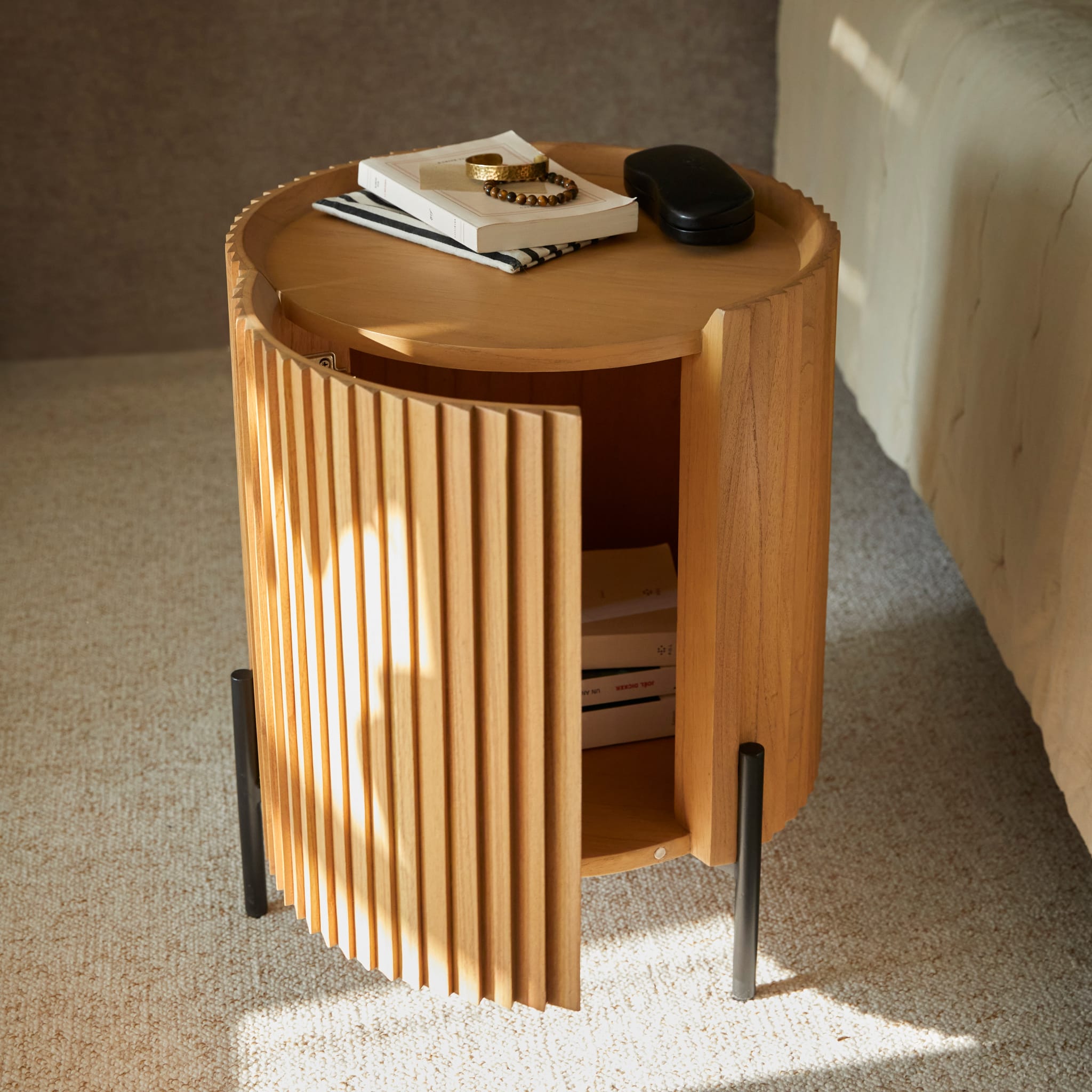
Photo: Tikamoon — [shop the Lou Mindi Wood Side Table here].
The Lou Mindi Wood Side Table brings a more sculptural approach to solid wood furniture. Made from dark mindi wood with a varnished finish, its rounded form, visible natural grain, and subtle Art Deco influence give it a distinctive look without making the piece feel overly decorative. A closed compartment also adds useful storage, making it a strong choice for living rooms where both design and everyday function matter.
2. MasayaCo — Telica Side Table
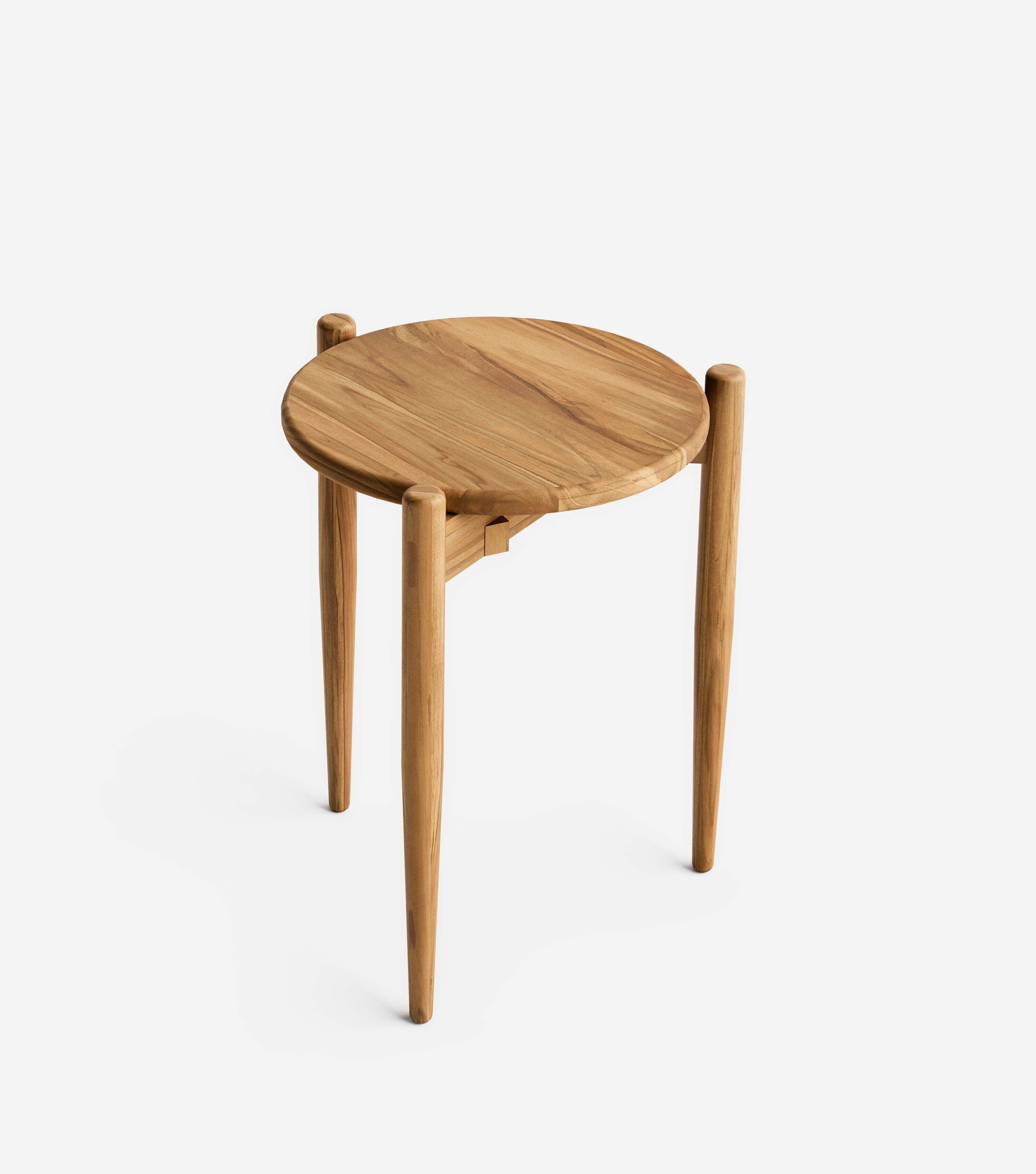
Photo: MasayaCo — you can purchase this piece here.
Built from FSC-certified teak grown on the brand's own reforested land in Nicaragua. Simple, stackable design that's easy to move around a small space.
3. Sabai — The Side Table
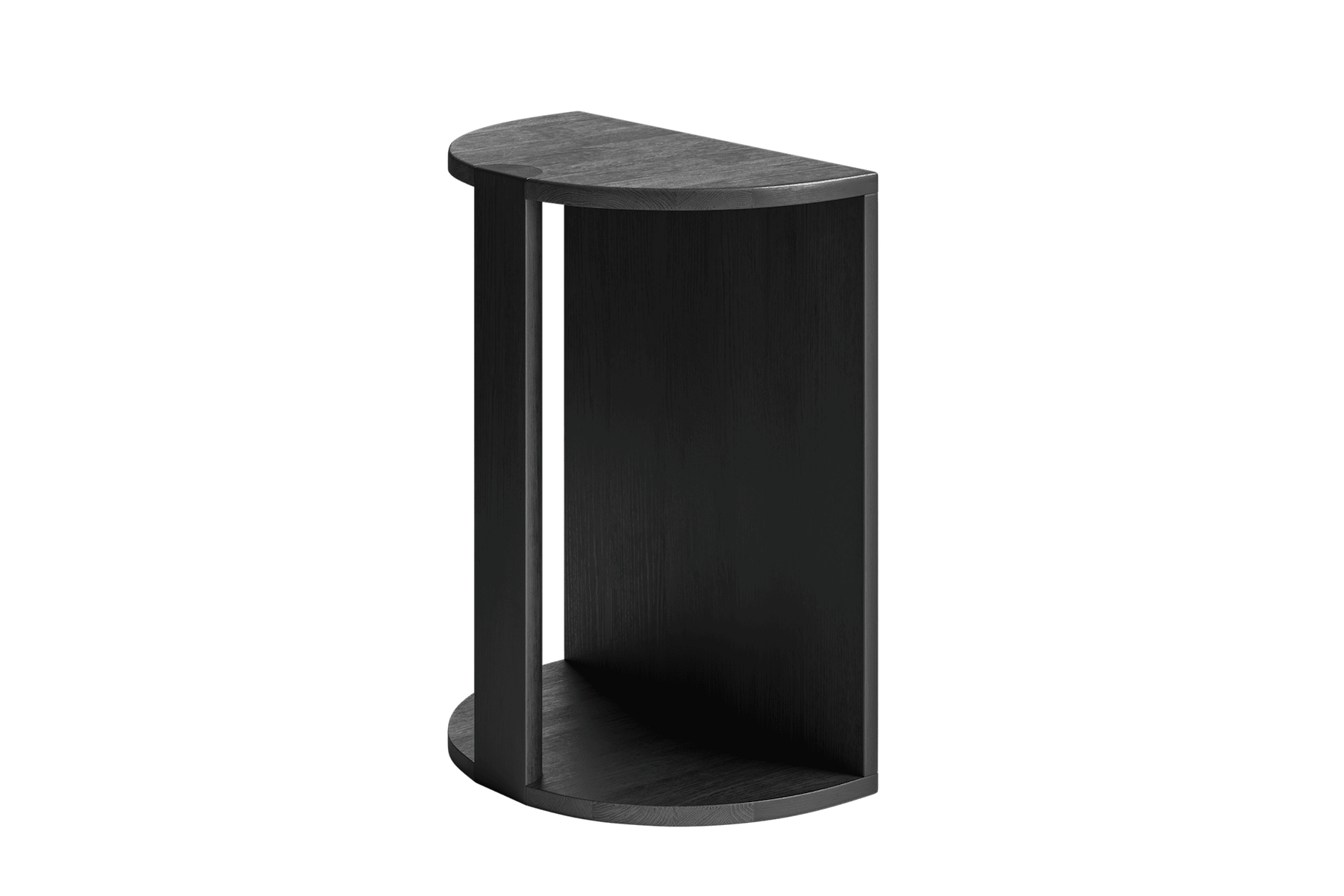
Photo: Sabai — you can purchase this piece here.
Handcrafted in Michigan from solid FSC-certified oak. Its half-moon shape and sub-11-inch width make it one of the better options for genuinely tight spaces, like a slim gap beside a bed or reading chair.
4. Urban Natural Home — Planes Round End Table
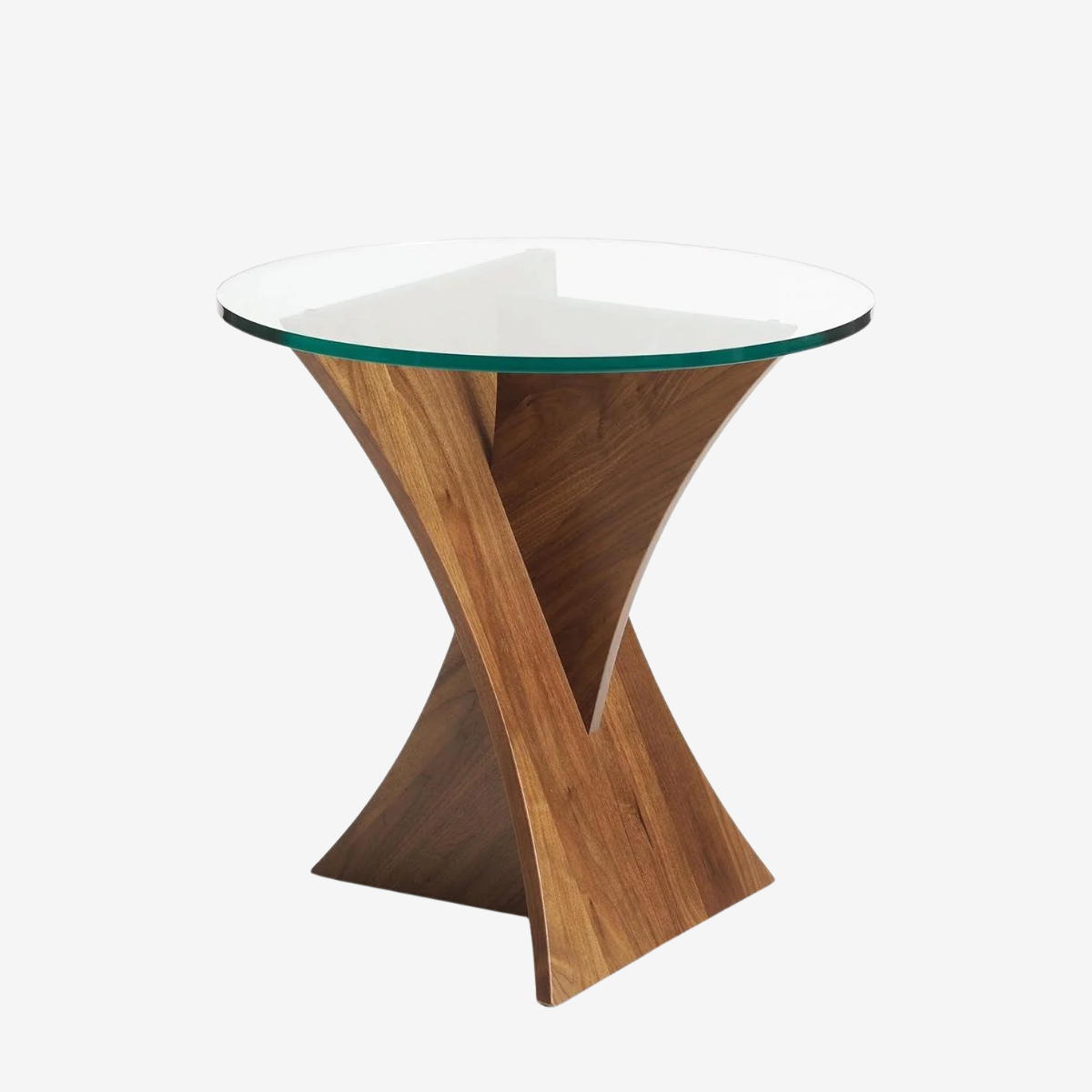
Photo: urban natural — you can purchase this piece here.
The Planes Round End Table by Copeland is handcrafted in Vermont from sustainably sourced solid American black walnut and finished with a clear 15mm tempered-glass top. Its sculptural wood base, natural walnut grain, and smooth finish create a refined modern look while keeping the beauty of the wood visible.
5. Avocado — Wood Side Table
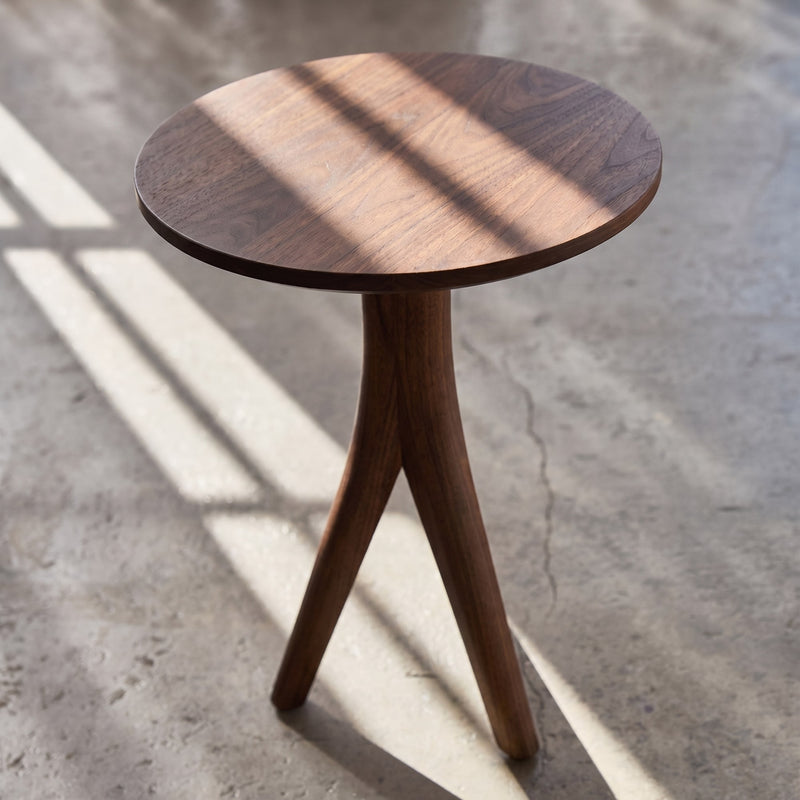
Photo: Avocado — you can purchase this piece here.
Made in Avocado's LA workshop from FSC-certified wood, this compact 13.5-inch table is built for small chairs and reading nooks where a full-size nightstand would feel oversized.
Caring for a Solid Wood Side Table
Good wood ages well with very little effort — most of it comes down to a handful of habits:
- Wipe spills immediately — even moisture-resistant woods like teak shouldn't sit wet for long periods
- Use coasters for hot or cold drinks to avoid thermal marks on the finish
- Reapply teak or Danish oil every 6–12 months depending on climate and sun exposure
- Keep it out of direct, prolonged sunlight to prevent uneven fading
- Dust with a dry or slightly damp cloth — avoid silicone-based furniture polish, which can build up over time
◆ ◆ ◆
Frequently Asked Questions
What's the ideal height for a wood side table?
For living room use, match it to within an inch or two of your sofa or chair armrest — typically 22–26 inches. For a bedside table, match it roughly to your mattress top height, usually 20–26 inches depending on your bed frame.
Is teak really better than oak for a side table?
For moisture resistance, yes — teak's natural oils make it far more resistant to warping from spills, humidity, or condensation. Oak is still a strong, durable choice, but it benefits from more careful placement away from consistent moisture.
How do I know if a wood side table is actually solid wood?
Check the edges — solid wood shows continuous grain running through the full thickness, while veneer shows a thin layer over a different material underneath. Weight is another clue: solid wood pieces are noticeably heavier than veneer or MDF equivalents of the same size.
Can a small side table double as a stool?
Some handcrafted designs are built for this dual purpose, with reinforced tops rated for light seating. If that's something you want, check the product specs for a weight rating rather than assuming — not every side table is built to be sat on.
How often does solid wood furniture need refinishing?
Most solid wood side tables don't need full refinishing for many years with basic care. A light oil reapplication every 6–12 months keeps the finish healthy; full sanding and refinishing is usually only needed after a decade or more, or if the surface has visible scratches or watermarks.
Find the Right Side Table for Your Space
The right wood side table comes down to getting three things aligned: a size that actually fits the gap you have, a style that matches what's already in the room, and a wood species suited to how the space gets used day to day. Handcrafted solid wood costs more upfront than mass-produced veneer, but it's one of the few furniture purchases that genuinely gets better with age instead of wearing out.



Leave a comment