


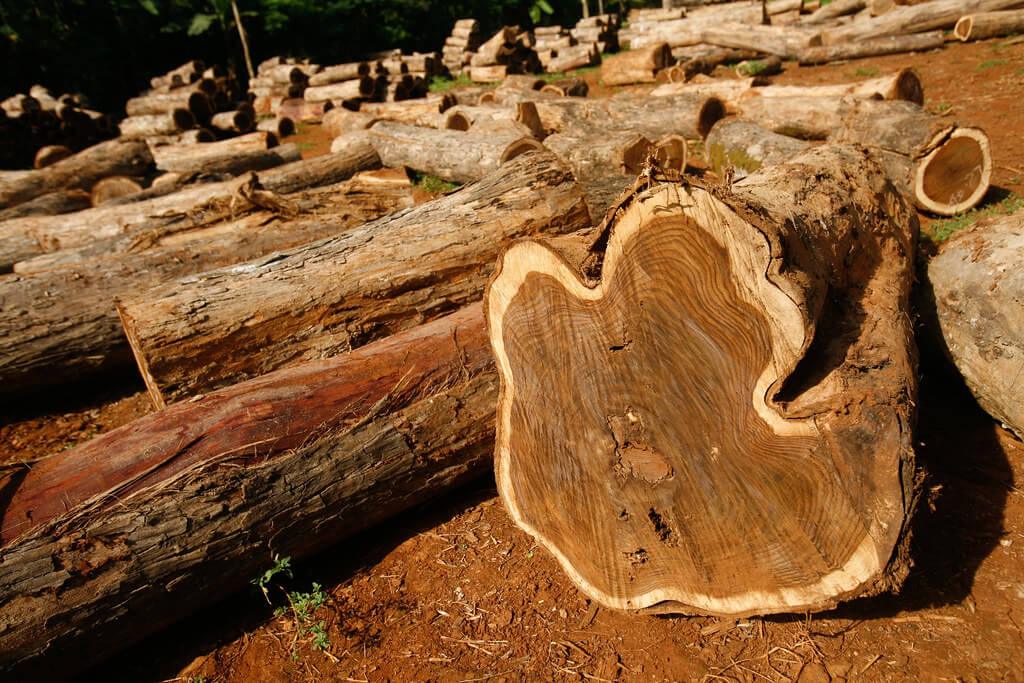
Teak has earned a reputation as the “king of woods” for outdoor and heirloom-quality furniture, but that reputation is worth understanding properly before you buy. Here's what teak actually is, why it holds up so well, and what to expect as it ages.
- What is teak wood, and where does it come from?
- How long does a teak tree take to mature?
- How hard and durable is teak wood?
- Is teak wood water-resistant?
- Does teak wood change colour as it ages?
- Why does teak sometimes develop small cracks?
- How long does teak furniture actually last?
- Why does teak cost more than other woods?
- Caring for teak furniture
- FAQ
What is teak wood, and where does it come from?

Teak comes from Tectona grandis, a large deciduous tree native to South and Southeast Asia. It's a hardwood known for its tight, straight grain and warm golden-brown colour, and it's rich in natural oils and silica — the combination that gives teak its resistance to rot, insects, and general wear, even with minimal upkeep.
How long does a teak tree take to mature?
Teak grows relatively quickly for a tropical hardwood, but quality still takes time. Most plantations allow 20 to 25 years of growth before harvesting, since older trees develop denser wood with a higher concentration of the natural oils that make teak so durable. Some producers wait even longer for old-growth density and colour.
How hard and durable is teak wood?
 On the Janka hardness scale — which measures the force needed to press a steel ball into a wood sample — teak rates around 1,000 to 1,155. That puts it ahead of woods like pine, cedar, chestnut, poplar, and mahogany, though it isn't the hardest wood available. Its real strength lies less in raw hardness and more in its natural resistance to rot, insects, and fungal decay, which is why it's held up as a favourite for boat decks and outdoor furniture for centuries.
Is teak wood water-resistant?

Teak isn't waterproof, but it comes close in practice. It's naturally porous, yet its high oil content protects it from the rotting, warping, and swelling that affect most other woods when they get wet.
After rain, you might notice water marks or slightly darker patches on unsealed teak. These usually fade on their own over time, or can be lightened faster with a light sanding.
Does teak wood change color as it ages?
Yes, and this is one of its most distinctive traits. Left untreated outdoors, the surface layer of teak gradually oxidises from UV exposure and rain, shifting from its original honey-gold tone to a soft, silvery-grey patina. This change is purely cosmetic — it affects only the surface, not the wood's strength or structure. If you'd rather keep the original golden color, regular oiling or a teak sealant can slow the process.
Why does teak sometimes develop small cracks?
Natural movement in response to temperature and humidity changes can cause small surface cracks, sometimes called “checking.” This is a normal characteristic of solid wood and doesn't compromise the strength or structural integrity of a well-made teak piece.
How long does teak furniture actually last?
With basic care, teak furniture is known for lasting for decades — often outliving furniture made from less durable woods by a wide margin. Its combination of natural oils, tight grain, and rot resistance is what allows it to hold up outdoors year after year, even with little maintenance.
Why does teak cost more than other woods?
Teak's price reflects the time it takes to grow, the quality grading involved, and the labour that goes into selecting and finishing mature heartwood. Higher grades — cut from mature trees with a high natural oil content — command a premium because they perform and age better over the long term. For many buyers, that upfront cost is offset by decades of durability with minimal upkeep.
Caring for teak furniture
Teak asks very little of you compared to most woods. A regular wipe-down keeps it clean, and occasional oiling is optional — it's purely a matter of whether you want to preserve the original golden tone or let the wood weather naturally to its silvery patina. Either way, the wood itself stays structurally sound.
If you're drawn to teak's combination of durability and low maintenance, browse our teak collection to see the grain and finish in person before deciding on a piece for your home.
Frequently asked questions
Is teak good for outdoor furniture?
Yes — its natural oils and tight grain make it one of the most weather-resistant woods available, able to handle rain, sun, and temperature changes without rotting or warping.
Does teak furniture need to be sealed or oiled?
Not strictly. Teak's natural oils already offer protection. Sealing or oiling is optional and mainly affects appearance — it slows the shift to a silvery-grey patina if you want to keep the original golden colour.
Is teak wood sustainable?
Sustainability depends on sourcing. Look for teak from managed plantations rather than unregulated logging, and ask suppliers about their sourcing practices if this matters to you.
Why does my teak furniture have dark spots after rain?
These are usually surface water marks, not damage. They typically fade naturally over time or can be removed faster with light sanding.
Is teak better than mahogany or oak?
It depends on the use. Teak generally outperforms both for outdoor durability and low maintenance, while mahogany and oak are often preferred for indoor furniture and can be more budget-friendly.


Leave a comment