


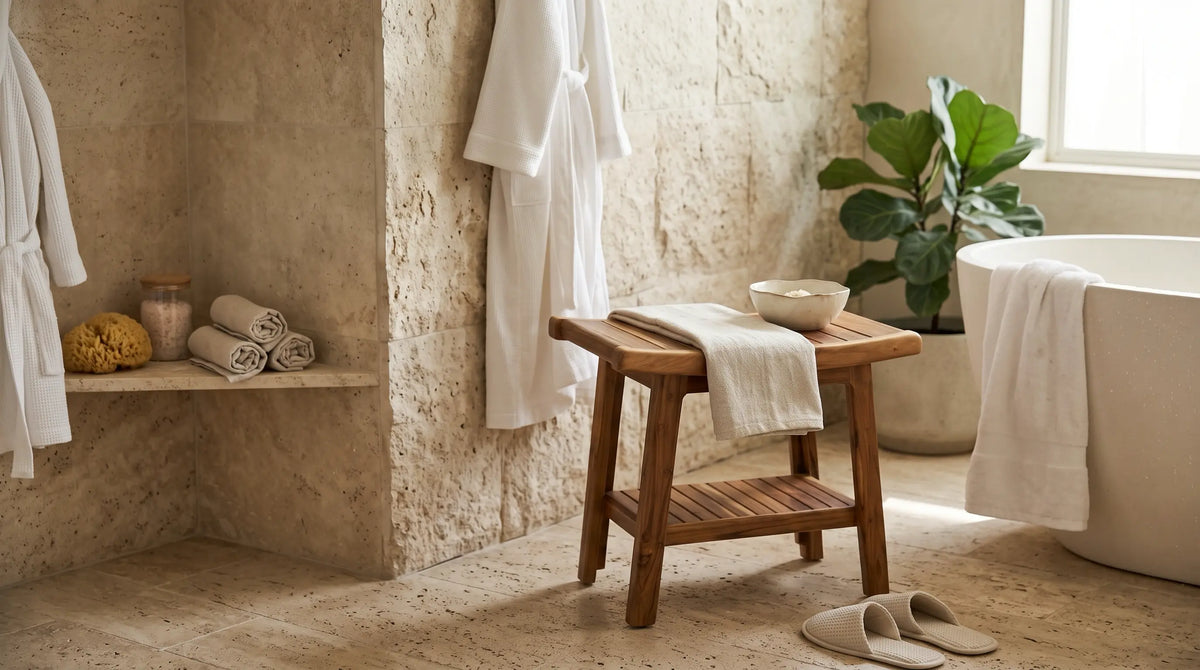
Not every wood belongs in a shower. Softwoods swell, warp, and can start to smell musty after repeated exposure to steam and standing water. That's why teak has remained a popular choice for bathroom furniture for so long — it's one of the few woods genuinely suited to a wet, humid environment rather than merely tolerating it.
This guide looks at what makes teak different, how it compares to other materials sometimes used for shower seating, and what to check for when choosing a teak shower bench for your own bathroom.
What makes teak naturally suited to wet environments
Teak contains natural oils that most other timbers don't have in the same concentration. These oils sit within a tight, dense grain structure, which limits how much water the wood absorbs and slows the swelling and warping that affect many other woods when exposed to repeated moisture. This is the same natural resistance that has made teak a long-standing choice for boat decks and outdoor furniture, environments that are consistently wet.
That natural density also means teak doesn't need heavy chemical treatment to hold up indoors. A well-made teak bench can handle daily steam and splashing without the surface breaking down the way untreated softwoods often do.
Teak vs other woods for shower use
Not all wood — or wood alternatives — perform the same way in a shower. Here's a general comparison of common options.
| Feature | Teak | Bamboo | Untreated softwood (e.g. pine) |
|---|---|---|---|
| Natural moisture resistance | High — natural oils limit water absorption | Moderate — often needs sealing to perform well in wet areas | Low — prone to swelling and warping |
| Typical lifespan in a shower | Long-lasting with minimal upkeep | Shorter unless well-maintained | Shortest; deteriorates faster in humidity |
| Maintenance needs | Occasional cleaning; low upkeep | Regular sealing recommended | Frequent sealing and monitoring |
| Common use case | Everyday shower and spa-style bathrooms | Budget-friendly bathroom accessories | Not generally recommended for showers |
Plastic and resin benches are also common, and they're not prone to water damage, but they don't offer the same natural look or feel — and they can't be refreshed the way wood can with light sanding or oiling over time.
What to look for when choosing a teak shower bench
If you're comparing shower benches, a few details make a real difference to how well the piece performs over time:
- Grade of teak. Grade A heartwood — the denser, more oil-rich part of the tree — performs better in wet conditions than lower grades or sapwood.
- Construction quality. Look for solid, well-fitted joinery rather than a bench held together primarily with metal brackets, which can corrode in a humid bathroom.
- Size and stability. A bench that's stable underfoot and sized appropriately for your shower or bathroom layout will feel safer and more comfortable to use daily.
- Finish. Some teak furniture is left with a natural finish, while other pieces are oiled or sealed. Confirm which finish suits your bathroom and maintenance preferences before ordering.
Wood Ceylon's shower benches are handcrafted from Grade A teak heartwood, which is worth checking for when you're comparing options elsewhere.
Even naturally moisture-resistant wood benefits from good bathroom ventilation. Wiping down the bench after use and allowing the bathroom to air out helps any wood surface perform at its best over the long term.
Where a teak shower bench works well
A teak shower bench suits more than one type of space:
- Home bathrooms, where it adds a warm, natural material against tile or stone
- Spa-style bathrooms, where the goal is a calmer, more considered look
- Hotel and guesthouse bathrooms, where durability and a natural finish both matter for guest-facing spaces
If you're sourcing for a hospitality property rather than a single home, it's worth looking at options suited to bulk or trade ordering rather than a single retail purchase.
Frequently asked questions
Is a teak shower bench actually waterproof?
No wood is entirely waterproof. Teak is naturally moisture-resistant due to its oil content and dense grain, which is why it performs better than most woods in a shower, but it still benefits from basic care like ventilation and occasional wiping down.
Does a teak shower bench need to be sealed?
This depends on the specific piece and finish. Some teak furniture is left natural, while other pieces use an oil or sealer. Check the product listing or ask before ordering if you're unsure which finish you're getting.
Will a teak shower bench smell or develop mould?
Teak's tight grain and natural oils make it more resistant to moisture retention than many other woods, which reduces — but doesn't eliminate — the conditions mould needs to grow. Good bathroom ventilation is still the biggest factor.
Can a teak shower bench be used outdoors as well?
Teak is well known for outdoor use in general, but suitability for a specific product depends on its construction and finish. Check the individual product details rather than assuming every indoor shower bench is rated for outdoor exposure.
How is a teak shower bench different from a teak bath mat?
A shower bench is a seated piece designed to bear weight and stay stable in the shower, while a bath mat is a flat, slatted piece designed mainly for standing on. They're often made from similar wood but serve different purposes.
Is teak a sustainable choice for bathroom furniture?
Teak's durability means pieces often last for years with minimal replacement, which can make it a practical long-term choice. For specific sourcing or certification details, it's best to check directly with the supplier.
Teak's natural resistance to moisture is well established, but the right bench for your bathroom still depends on your space, your style, and how the piece is built. Explore our teak shower bench with storage shelf, or browse the wider bathroom collection to see how it fits with other pieces for your space.



Leave a comment