


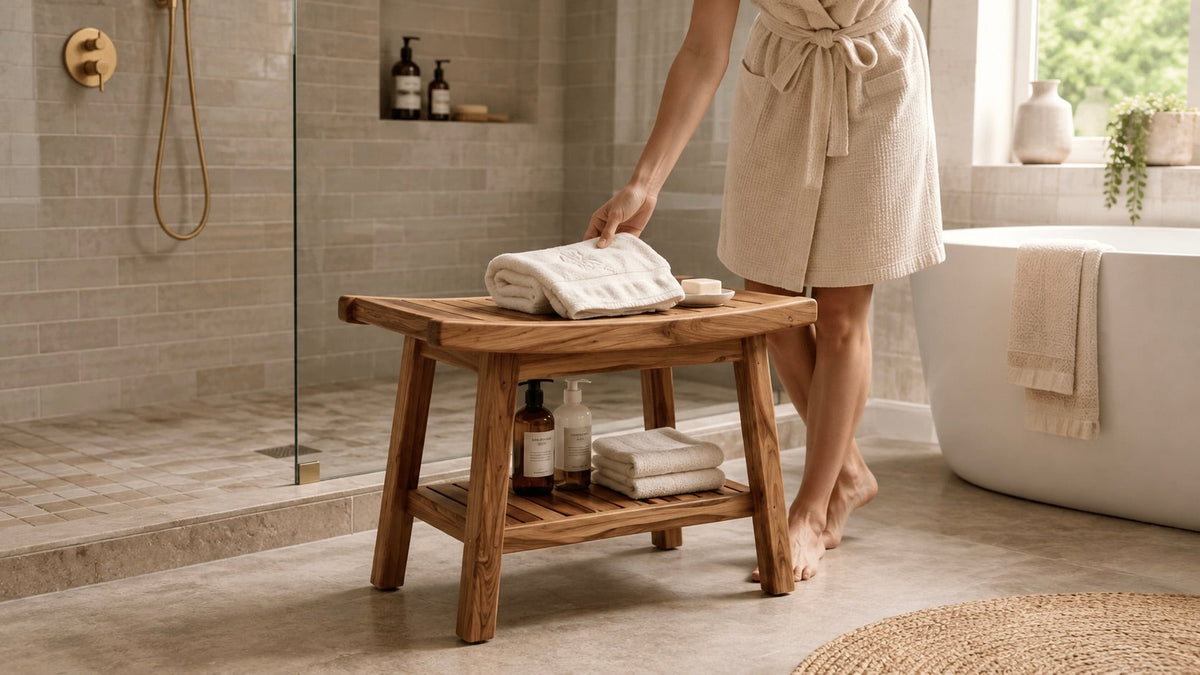
Not every teak shower stool is built the same way, even when two listings look nearly identical in photos. The wood grade, how the joints are put together, and whether the piece has been finished or left natural all affect how a stool performs in a wet, humid bathroom over time. This guide walks through the factors that actually separate a well-made teak shower stool from one that will warp, wobble or grey out faster than expected — so you know what to check before you buy.
What "best" really means for a teak shower stool
A shower stool sits in one of the harshest environments a piece of furniture can face: constant moisture, temperature swings, and regular contact with soap, shampoo and skin oils. "Best" isn't about the most decorative design — it's about the combination of material quality, build strength and practical fit for your bathroom that keeps a stool stable, comfortable and good-looking for years rather than months.
Four things drive that outcome: the grade of teak used, how the piece is joined together, the finish (or lack of one), and whether the size and style genuinely suit your shower. The sections below go through each one.
Teak grade: the biggest factor in quality

Teak wood is graded, and the grade has more influence on longevity than almost anything else about a shower stool. Higher grades come from the heartwood of mature trees, where the wood's natural oils are most concentrated — those oils are what make teak naturally water-resistant and slow to rot, without needing paint or sealant.
Lower grades typically include more sapwood (the outer, lighter colored part of the trunk with far less natural oil) or wood from younger trees. It can look similar when new, but it tends to absorb more moisture, dry out unevenly, and develop cracks or discoloration sooner in a shower environment.
| Feature | Higher-grade heartwood | Lower-grade / sapwood |
|---|---|---|
| Natural oil content | High, deep water resistance | Lower, less resistant to moisture |
| Color consistency | Even, deep tone | Lighter streaks common |
| Long-term durability in showers | Strong | Can crack or discolor sooner |
Sapwood versus heartwood is genuinely hard to judge from a photo. A trustworthy listing or seller should be able to tell you which grade the piece is made from, rather than leaving it to guesswork.
Construction and joinery: how it's built matters

A shower stool takes weight, movement and repeated wetting and drying — so how the joints are made matters as much as the wood itself.
Traditional joinery methods, such as mortise-and-tenon joints or dowelled construction, interlock the wood pieces directly, which holds up well to the constant expansion and contraction that happens as teak absorbs and releases moisture. Stools held together mainly with staples, screws into end grain, or adhesive alone are more likely to loosen over time in a wet environment, since the glue bond is the weak point once humidity gets involved.
If a listing doesn't describe how the piece is joined, it's worth asking directly — a well-built stool is usually happy to have this detail highlighted.
Finish: oiled, sealed or left natural
Teak is unusual among woods because it often performs best in wet environments with no added finish at all. The wood's own oils provide natural water resistance, and many manufacturers deliberately leave shower-specific pieces unfinished, or with only a light oil treatment, rather than sealing them the way outdoor teak furniture sometimes is.
A heavy varnish or lacquer finish can actually work against a shower stool, since it traps moisture underneath the coating rather than letting the wood breathe and dry naturally between uses. When comparing options, it's worth asking whether the piece has been finished, and if so, with what — rather than assuming a glossier look means better protection.
Choosing the right size and style
The best teak shower stool for one bathroom isn't necessarily right for another. A few practical questions help narrow the choice.
- How much clear floor or wall space do you have? A compact stool suits small or corner showers, while a wider bench-style seat works better in a walk-in shower.
- Will it be used for sitting, or as a footrest and shelf? Taller stools often suit shaving or resting a foot, while lower, wider benches double as seating and storage.
- Does the shower have a step, ledge or drain nearby? These affect where a stool can safely sit without blocking water flow.
- Do you want a fixed corner fit, or a piece you can move around? Corner-shaped stools save space but are less flexible than a freestanding design.
Measuring your available space before choosing a style avoids the common problem of a stool that looks right online but doesn't actually fit the shower once it arrives.
Safety features to look for
Because a shower stool is used on wet tile, stability isn't optional. A few features are worth checking for.
- Non-slip feet or pads, which stop the stool sliding when weight is placed on it.
- A stable base with adequate legroom, rather than a narrow footprint that can tip under uneven weight.
- Smooth, sanded edges and joints, since rough or splintering wood becomes more noticeable — and less comfortable — with repeated wet use.
None of these are difficult to check for, but they're easy to overlook if you're only judging a stool by its appearance in photos.
Common mistakes when buying a teak shower stool
Caring for your teak shower stool
Even a well-made teak shower stool benefits from basic care. Rinsing off soap residue after use, allowing the piece to air-dry between showers, and avoiding harsh chemical cleaners all help preserve the wood's natural oils and appearance. Over time, teak that isn't oiled will naturally weather to a soft silver-grey tone — this is a normal part of how the wood ages and isn't a sign of damage, though some owners prefer to apply teak oil periodically to maintain the original honey-brown colour.
Frequently asked questions
What makes teak a good choice for a shower stool?
Teak contains natural oils that give it water resistance without needing an artificial finish, which makes it well suited to the constant moisture in a shower environment.
Do teak shower stools need to be sealed or oiled?
Not necessarily. Many teak shower pieces are left unfinished so the wood can breathe and dry naturally, though some owners choose to oil theirs periodically for colour maintenance.
How can I tell if a teak stool is a higher grade?
Higher-grade teak generally comes from mature heartwood with a deeper, more even colour and fewer visible light streaks, which indicate sapwood content. A seller should be able to confirm the grade directly.
Will a teak shower stool eventually change colour?
Yes, unfinished teak naturally weathers to a silver-grey tone over time with exposure to water and humidity. This is a normal ageing process rather than a defect.
What size shower stool works best for a small bathroom?
A compact or corner-style stool typically suits smaller showers better than a wide bench, since it takes up less floor space while still providing a stable seat or footrest.
Is a teak shower stool safe on wet tile floors?
A well-designed stool with non-slip feet and a stable base is designed for wet-floor use, but it's worth checking for these features specifically rather than assuming all stools include them.
If you're weighing up size, style or finish for your own bathroom, browse our bathroom collection to see the options available, or get in touch with your shower measurements if you're considering a custom size or configuration.


Leave a comment